

WARNING: Bad Agents are impersonating neighborhood association presidents using names from websites but fake email addresses. Verify sender addresses before responding.
Bison Prairie Gateway
Unique art and native landscaping off the Southwest Commuter Trail
A key project of Midvale Heights Community Association was the creation of the Bison Prairie Gateway in 2002 from an empty lot off the bike trail.
Serving as an entrance point to our neighborhood, it was a group effort, and continues to offer volunteer opportunities to maintain and expand this shared resource. See the Green Team page and event calendar for work days.


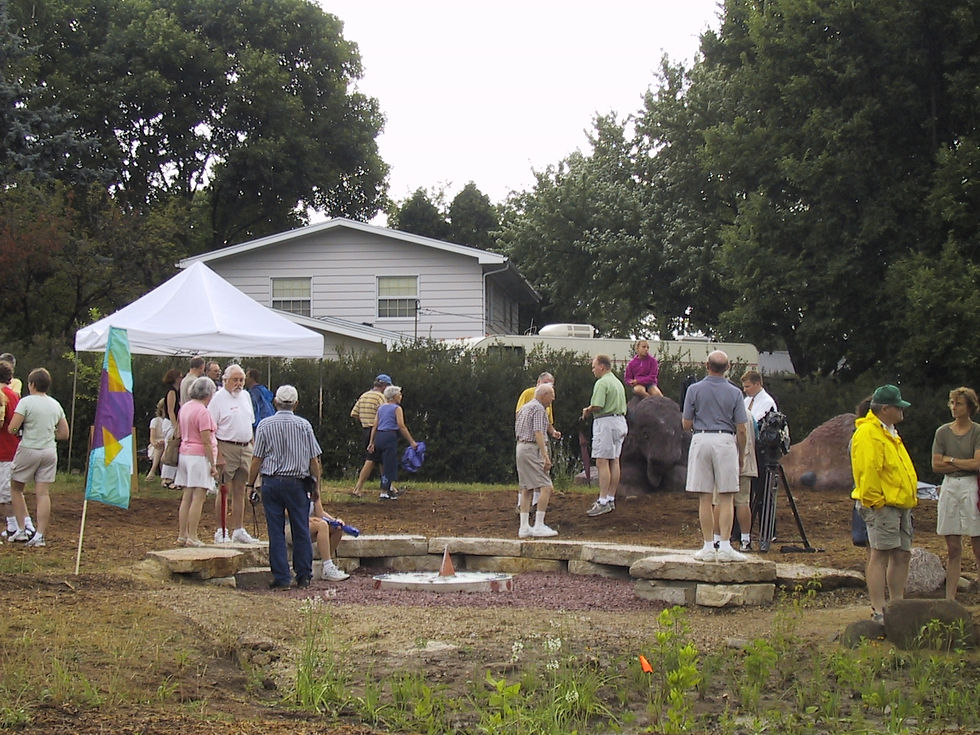
The Creation of Bison Prairie Gateway
It's hard to believe this vacant lot along the bike path was ignored for so long. But one man, Bill Grover, had an idea to change that. He talked to a few neighbors, they talked to a few more, and before long a vision emerged: a gateway to the Midvale Heights neighborhood.
The project didn't happen overnight. A design team formed and spent eight months developing ideas before settling on a plan rooted in the area's natural and cultural history. Research revealed that Midvale Heights sat atop glacial till, with ancient Cambrian sandstone and limestone beneath it, and at the edge of the historic North American bison range and prairie ecosystem.
The vision grew into a living landscape: a prairie and rain garden, an interactive sundial with limestone seating, life-sized bison and calf sculptures, a hidden time capsule, and a neighborhood sign.
As word spread, nearly 100 neighbors became involved. Volunteers wrote grants, raised funds, worked with city officials, consulted experts, organized schedules, and contributed countless hours of labor.
Planting came first. Native perennials, grasses, shrubs, and trees were selected for beauty and low maintenance, including wild onions, black-eyed Susans, liatris, asters, ironweed, flowering crabapples, redbud, ginkgo, ironwood, and a young bur oak destined to become a landmark tree representing the oak savannas that once covered this landscape.
The bison sculptures soon followed. During the hot summer of 2002, volunteers spent weekends digging footings, setting gravel, and hand-mixing concrete. Reinforcing rods created the framework, wire and diamond lath shaped the forms, and layers of concrete brought the life-sized bison and calf to life.
Bill Grover, a professional sculptor, provided the vision, research, models, and leadership that guided the project. He also reduced his professional fee by 40 percent, helping make the project possible.
A donated bobcat and operator moved six tons of stone for the sundial seating area. Limestone benches were arranged in a semicircle open to the south, creating a place for cyclists and neighbors to rest. Etched markings on the stones indicated the hours of the day.


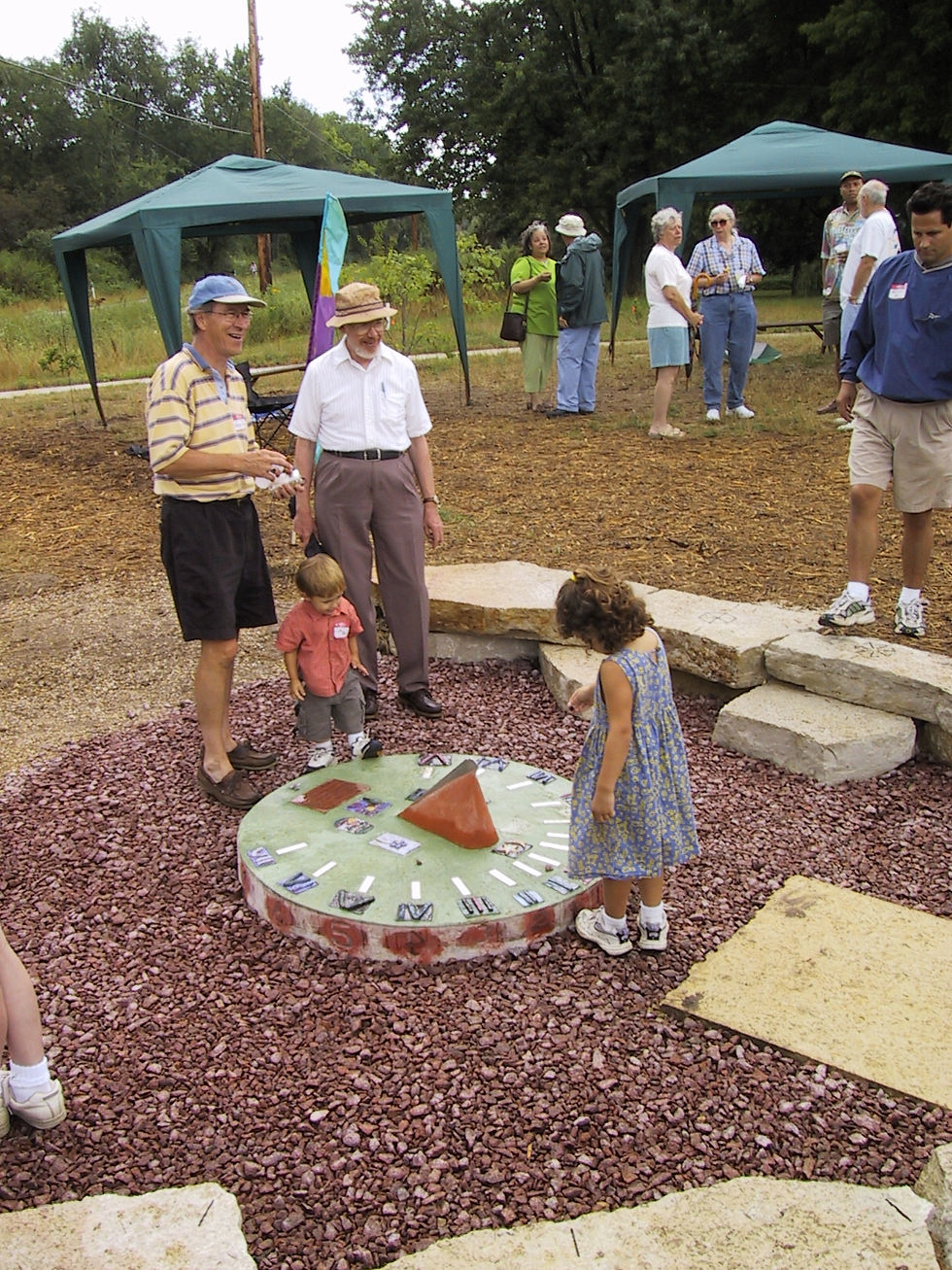
Local eighth-grade art students designed and created the colorful sundial tiles and composed instructions for its use:
If you want the time of day,
See your shadow as it may lay,
Go to the opposite side you may say,
Sight down the Steel so you may play,
Turn around to the seats and see the display,
The top of your shadow is the time of day.
Standing at the gnomon in the center, visitors could use their own shadow to tell time. Rainwater was directed away from the bike path and into a rain garden, where it could naturally infiltrate the soil. Red granite, Wisconsin's state rock, was carefully placed to mark true north and high noon.
The project came together as a remarkable example of neighborhood collaboration and commitment. Midvale Heights gained a place to reflect, relax, and connect with the area's history and natural environment.
The dedication celebration took place despite rainy weather. Native American music filled the air, city officials joined volunteers in celebration, children enjoyed bison-shaped cookies, and the new prairie-style sign welcomed visitors from a base of glacial boulders.
After the dedication, neighbors realized one piece was still missing: a prairie worthy of the bison's home. With guidance from knowledgeable residents, a prairie restoration effort began. That effort continues to this day, enhancing the Gateway and strengthening its connection to the region's natural heritage.
The project was supported through grants from the City of Madison Community Enhancement Program and the Dane County Cultural Affairs Commission, gifts from the Madison Chapter of the Hardy Plant Society, contributions from local residents and businesses, the efforts of Friends of the Southwest Bicycle Path, plantings by Laura Brown and Mark Shahan, and the generosity of many individual volunteers whose work helped create and sustain the Gateway.

